

Total:€ 469,00
Sale

Cycle-Start Hormone Check at Home
Original price was: € 109,00.€ 99,00Current price is: € 99,00.
Establish an early-cycle hormone baseline with FSH, LH, estradiol, prolactin, SHBG and testosterone. Collect on cycle days 2–5 for meaningful assessment of pituitary signalling, ovarian activity and androgen balance.
Beschrijving
Establish Your Early-Cycle Hormone Baseline
Measure six important hormone markers on cycle days 2–5, when
ovarian hormone activity is normally at its early-follicular baseline.
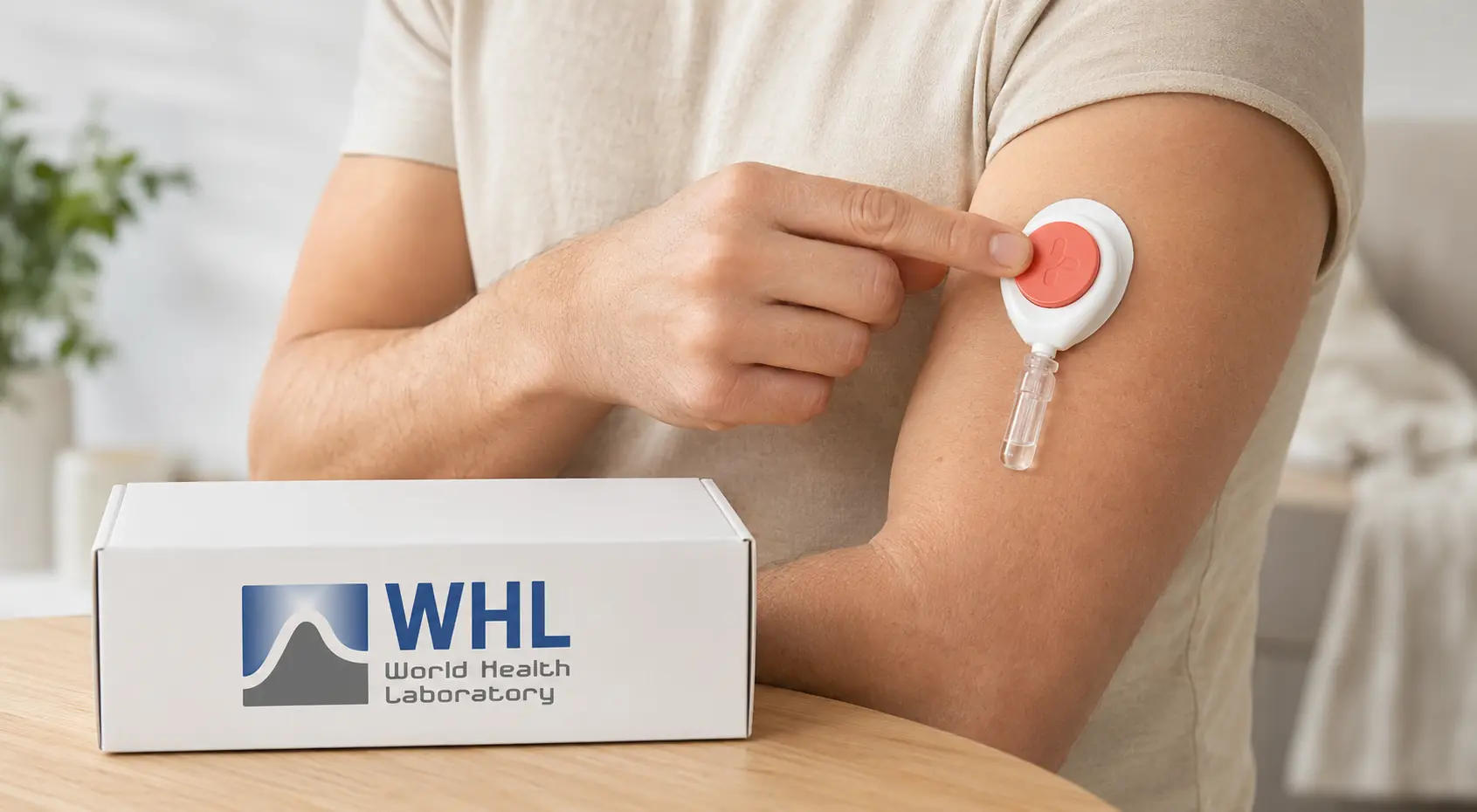
The included Tasso+ device collects a small blood sample from your upper arm,
allowing you to time collection according to your own menstrual cycle.
Six markers: FSH, LH, estradiol, prolactin, SHBG
and total testosterone
Timing: Collect on cycle days 2–5
Collection: Tasso+ device included
Sample: Minimum 200 µL serum
Results: Typically within 1–3 working days after arrival
What Does This Test Measure?
Follicle-stimulating hormone – FSH
A pituitary hormone that stimulates ovarian follicle development. Early-cycle
FSH is interpreted together with estradiol and age.
Luteinizing hormone – LH
A pituitary hormone involved in ovarian steroid production and ovulation. The
early-cycle LH pattern provides context for pituitary-ovarian signalling.
Estradiol
The principal estrogen during the reproductive years. Early-cycle estradiol
helps place FSH in context because higher estradiol can suppress FSH secretion.
Prolactin
A pituitary hormone involved in lactation and reproductive regulation. Increased
prolactin may suppress hypothalamic GnRH signalling and disrupt ovulation.
Sex hormone-binding globulin – SHBG
The main binding protein for testosterone and estradiol. Changes in SHBG influence
the proportion of hormone available to tissues.
Total testosterone
Provides information about circulating androgen status and should be interpreted
together with SHBG and clinical features.
Why Collect on Cycle Days 2–5?
FSH, LH and estradiol change throughout the menstrual cycle. Collecting during
the early follicular phase provides a standardized baseline before the dominant
follicle substantially increases estradiol production.
Cycle day 1 is the first day of full menstrual bleeding, not
light spotting. Collect your sample between days 2 and 5.
When Can This Test Be Useful?
- Irregular, absent or changing menstrual cycles
- Initial fertility or ovarian-function assessment
- Possible androgen imbalance
- Acne or increased facial or body hair
- Suspected elevated prolactin
- Establishing a baseline before further hormone testing
Simple Home Collection
1. Receive your kit
We deliver the complete Tasso+ collection kit directly to your home.
2. Wait for cycle days 2–5
Record the first day of full menstrual bleeding as cycle day 1.
3. Collect from your upper arm
Place the device on your upper arm and press the button. A small blood sample
is collected automatically.
4. Return your sample
Pack and return the tube according to the enclosed instructions. Your results
are typically available within 1–3 working days after arrival.
Before Collection
Collect in the morning, preferably before breakfast. Avoid strenuous exercise
and sexual activity on the morning of collection because these may temporarily
influence prolactin.
Sit and rest for approximately 20–30 minutes before collecting your sample.
Stress, poor sleep and recent breast or nipple stimulation may also affect prolactin.
Hormonal contraception, fertility medication and hormone therapy can substantially
influence the results. Do not stop medication without medical guidance.
Understanding Your Results
Your report provides all six hormone concentrations, measurement units and
cycle-appropriate laboratory reference intervals.
FSH should not be interpreted without estradiol. An elevated early-cycle estradiol
result may suppress FSH and make it appear lower than expected.
One early-cycle result does not independently measure egg quality or establish
ovarian reserve. Age, menstrual history, AMH and ultrasound findings may provide
additional information when fertility assessment is required.
Progesterone is not included because it should be assessed during the luteal phase,
approximately 6–8 days after ovulation.
Six hormone markers, timed to the start of your cycle.
Additional information
| Weight | 0,5 kg |
|---|---|
| Dimensions | 16 × 2,5 cm |
| Sample Type |