Advanced Longevity Diagnostics for Precision Health Optimization
Go beyond standard health checks. Identify early metabolic, hormonal, and cellular imbalances through advanced laboratory diagnostics.
At World Health Laboratories, we combine clinically relevant biomarkers with advanced analytical methods to help you understand what is happening inside your body and support a longer, healthier, and more resilient life
- LC-MS/MS and ICP-MS based diagnostic
- Functional and clinical biomarkers
- International laboratory expertise
A Clinical Perspective
on Longevity
A modern longevity strategy goes beyond lifestyle alone. While exercise, nutrition, and recovery are essential, they represent only part of the picture.
What matters clinically:
- Many metabolic, hormonal, and cellular imbalances develop gradually and often without early symptoms
- When identified late, these imbalances may be more difficult to correct or may already affect physiological function
- Early detection allows for more precise and effective intervention
Why testing is essential:
- Lifestyle alone does not reveal internal biological changes
- Advanced diagnostics help identify early functional imbalances
- Timely intervention improves long-term outcomes and sustainability
A structured, data-driven approach enables earlier insight into health risks, supporting better decision-making and more effective long-term health strategies.
Lifespan vs Healthspan
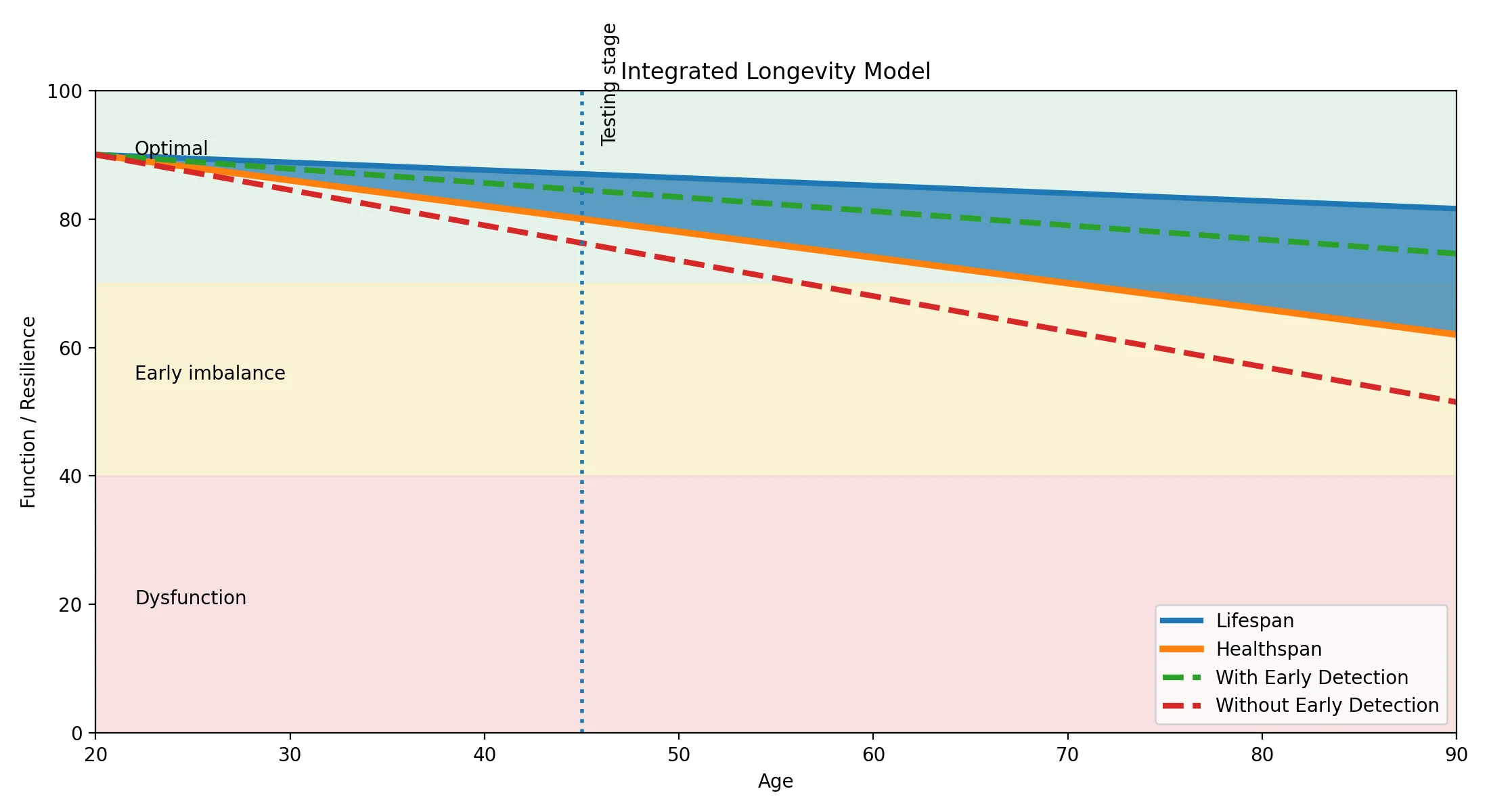
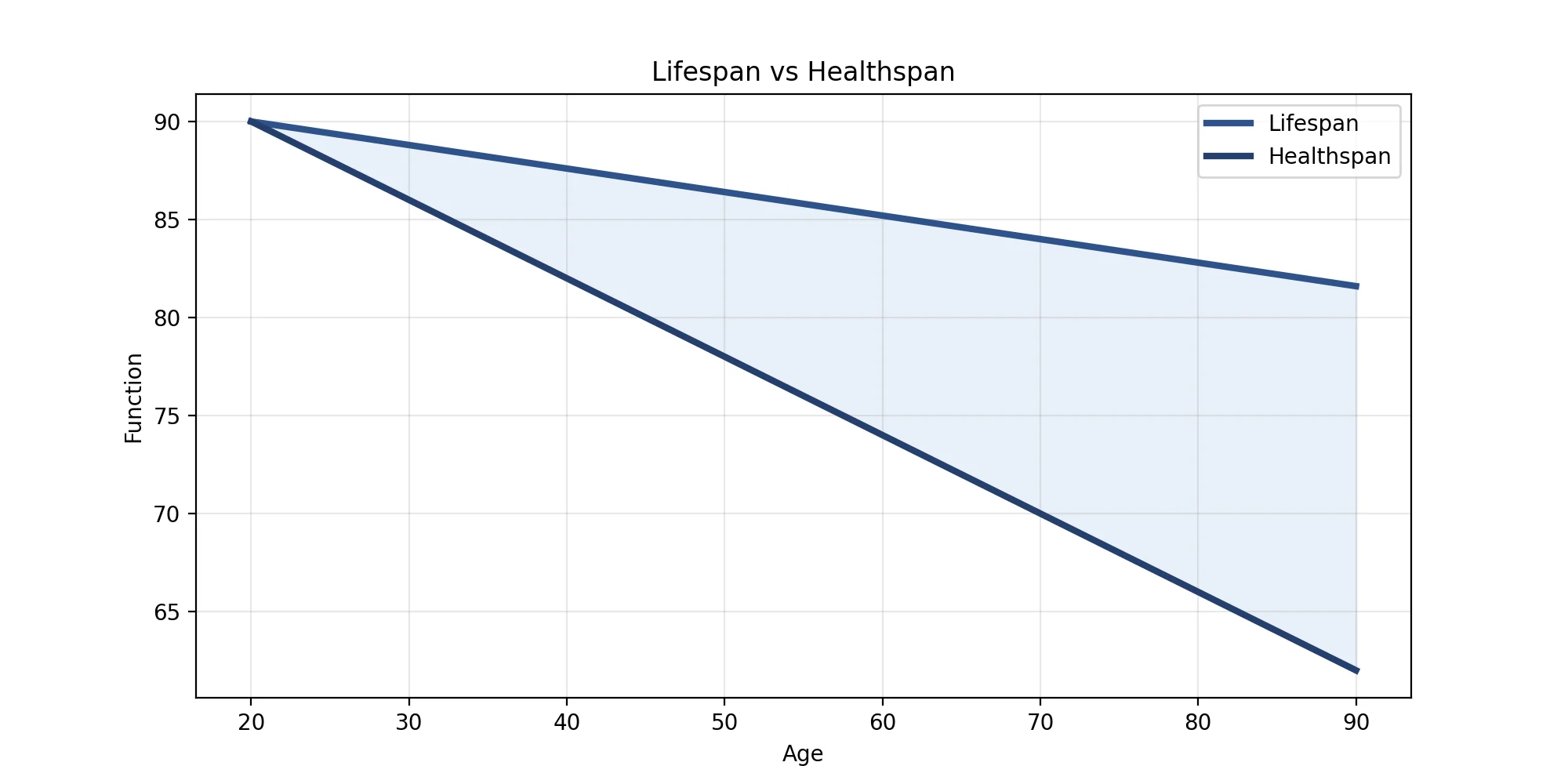
- Lifespan reflects total years lived, while healthspan represents years lived in good physical and cognitive function
- Functional decline often begins before clinical disease is diagnosed
- The goal of a clinical longevity strategy is to reduce the gap and preserve function for longer
Impact of Early Detection
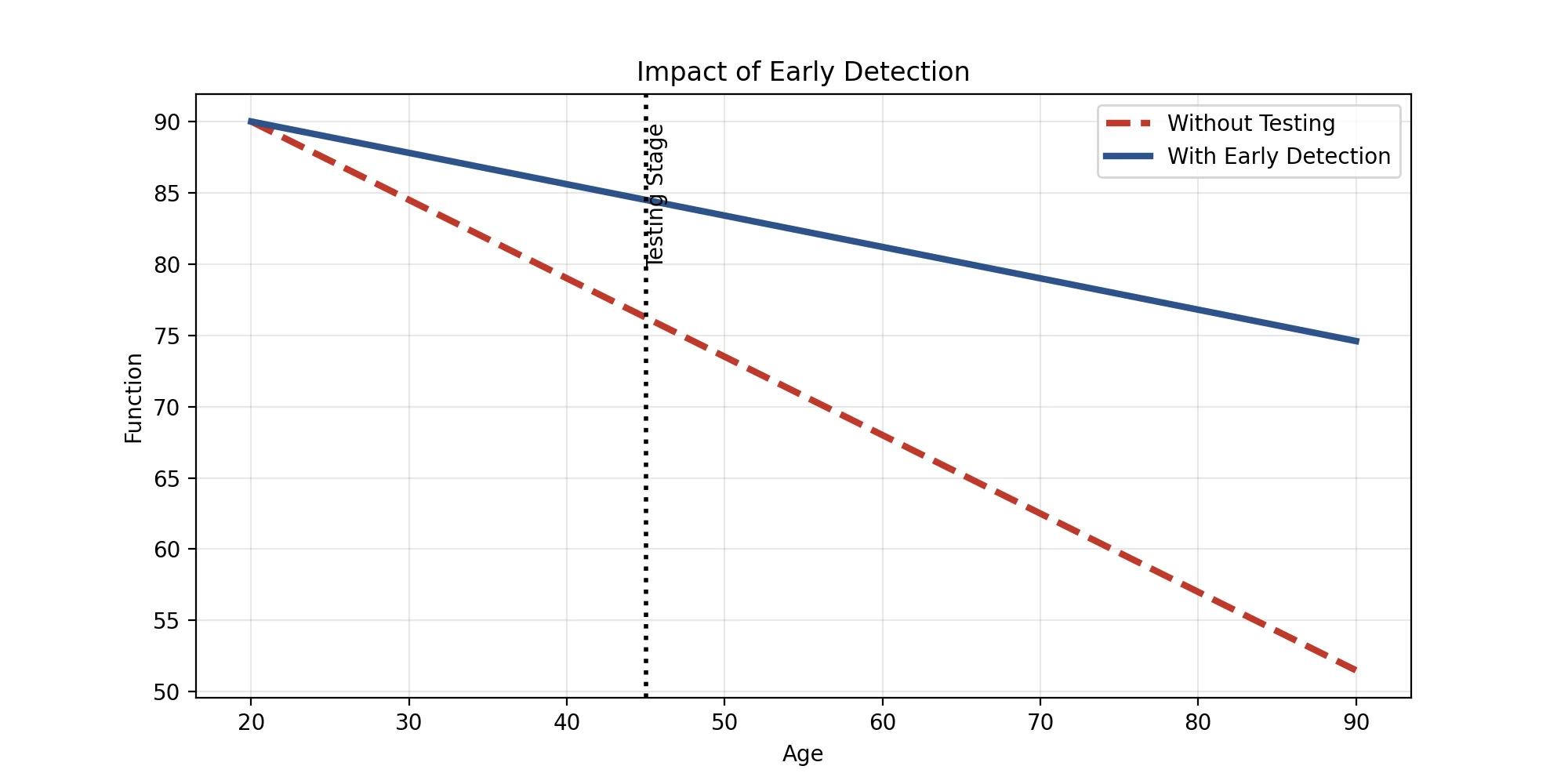
- Without testing, functional decline may progress unnoticed until later stages
- Early identification allows for targeted intervention before significant deterioration occurs
- This approach supports more effective and sustainable long-term health outcomes
Metabolic Decline Over Time
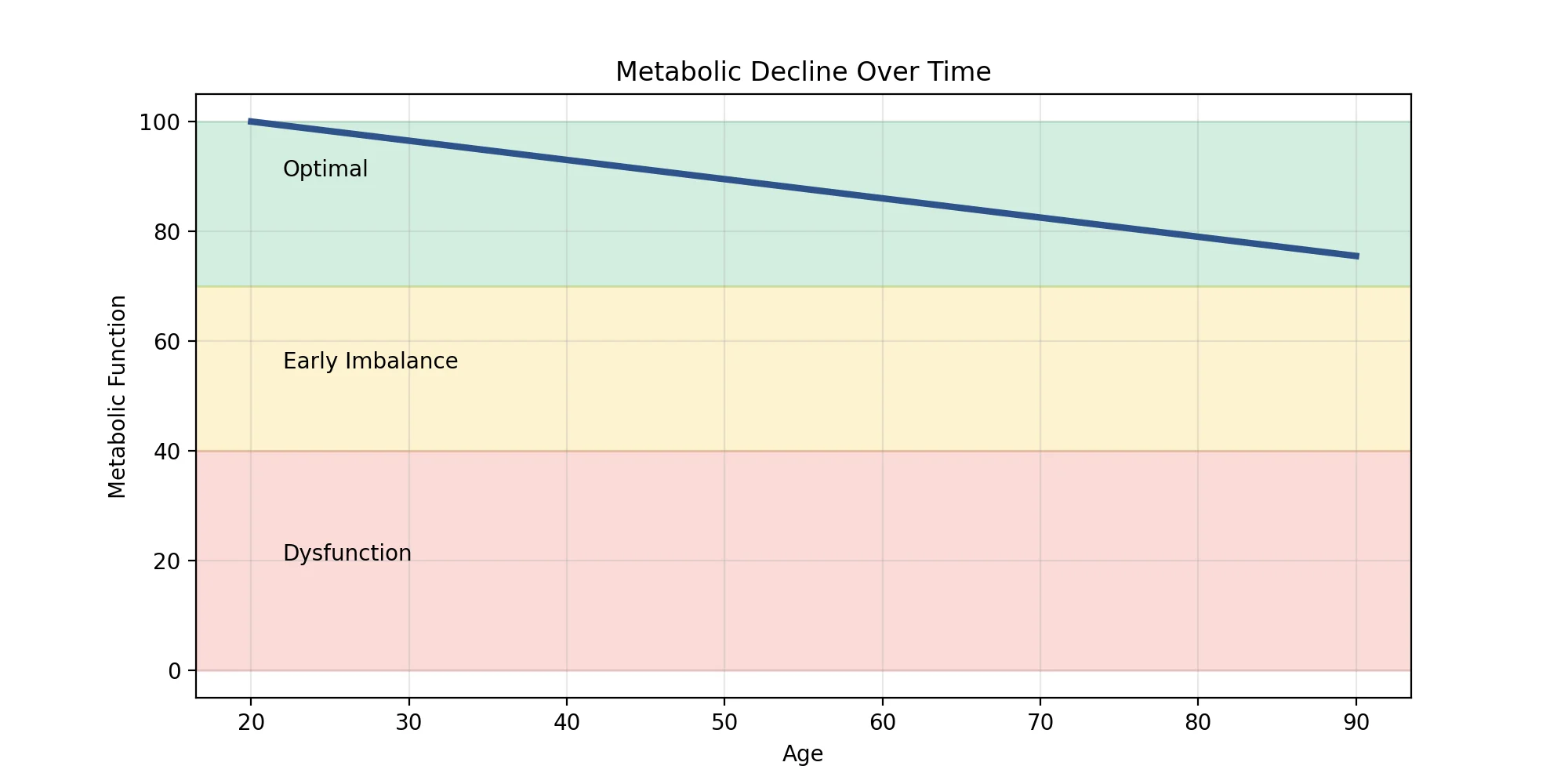
- Biological function typically declines gradually, often without early symptoms
- Early imbalance represents a critical window where intervention is most effective
- Advanced testing helps detect these changes before progression to more significant dysfunction
Why Testing Matters
Measuring What Cannot Be Seen
Physical activity, nutrition, and healthy habits are essential foundations of long-term health. However, they do not provide a complete picture of what is happening inside the body.
Internal biology must be measured, not assumed.
Early changes often occur before symptoms appear.
Subtle metabolic, hormonal, and cellular imbalances can develop gradually and remain undetected without targeted testing, making early identification essential for effective prevention and intervention.
Absence of symptoms does not indicate optimal health.
Lifestyle Alone Is Not Sufficient
Even individuals with good lifestyle habits may develop early functional imbalances that are not visible and often remain without symptoms in the initial stages.
These may include:
- Early metabolic imbalance and insulin resistance
- Reduced cellular energy production (mitochondrial dysfunction)
- Hormonal dysregulation
- Low-grade inflammation
- Oxidative stress and cellular damage
- Micronutrient deficiencies
- Environmental exposures affecting long-term health
Without objective measurement, these changes can progress unnoticed.
The Role of Testing in Targeted Intervention
Modern longevity strategies increasingly rely on biomarker-based assessment to identify early biological changes before they develop into more significant dysfunction.
This approach allows:
- Identification of individual biochemical needs
- More precise and targeted supplementation
- Avoidance of unnecessary or inappropriate supplement use
- Monitoring of response to interventions over time
In practice, this means moving away from general or empirical supplementation toward a more personalized, data-driven approach.
Why This Matters Today
Modern food systems and environmental factors can influence nutrient availability and metabolic health.
- Intensive agricultural practices may reduce micronutrient density in foods
- Environmental exposures may increase physiological burden
- Individual requirements vary significantly based on metabolism, lifestyle, and genetics
For this reason, relying solely on diet or generalized supplementation may not adequately address individual needs.
From Function to Dysfunction
Biological decline typically follows a gradual progression:
Optimal function → Subtle imbalance → Functional disturbance → Symptoms → Overt disease
Advanced testing enables detection at earlier stages, where intervention is more effective, targeted, and sustainable.
Clinical Perspective
A structured, biomarker-based approach provides insight into internal physiology, allowing for:
- Earlier identification of risk
- More precise intervention strategies
- Better long-term health outcomes
Testing does not replace lifestyle. It complements it by providing the data needed to make informed and effective decisions.
The Six Pillars of Healthy Longevity
These six pillars form the foundation of WHL’s longevity framework and guide how we approach long-term health optimization through clinically relevant and functional assessment.
Assessment of glucose regulation, insulin sensitivity, lipid handling, and broader metabolic efficiency to support sustained energy, cardiovascular stability, and long-term resilience.
Metabolic Health
Evaluation of cellular energy production and functional patterns that may contribute to fatigue, reduced resilience, slower recovery, and diminished physical or cognitive performance.
Mitochondrial Function
Review of endocrine and adrenal regulation influencing mood, energy, sleep quality, body composition, vitality, and the body’s ability to adapt to physiological stress.
Hormonal Balance
Detection of inflammatory and oxidative processes that may accelerate biological wear, impair recovery, affect tissue integrity, and contribute to long-term functional decline.
Inflammation & Oxidative Stress
Assessment of toxic elements, PFAS, endocrine disruptors, and broader environmental exposures that may interfere with cellular function, metabolic balance, and long-term health.
Detoxification & Environmental Burden
Evaluation of vitamins, minerals, and functional cofactors required for metabolism, cellular repair, immune balance, tissue maintenance, and overall physiological resilience.
Micronutrient Status
Longevity Testing Options
Four structured testing pathways to match different levels of clinical depth, preventive goals, and functional complexity..
How the Longevity Program Works
A structured and clinically guided process designed to translate advanced laboratory testing into meaningful, personalized health action.
Choose the Right Test
Select the most appropriate panel test finder or guided consultation.This step helps match testing depth to your symptoms, health priorities, and preventive goals.
Collect & Submit
Complete your sample collection through clinic-based or postal submission where applicable.Clear instructions and proper sample handling are essential for reliable and clinically useful results.
Interpretation & Strategy
Results are reviewed in a clinical context and translated into a structured personalized plan.Recommendations may include nutrition, lifestyle, targeted supplementation, and further follow-up if needed.
Follow-up & Optimization
Reassessment helps track progress and refine your long-term health strategy over time.This allows objective monitoring of change and supports a more precise and sustainable optimization process.
Who Is This For?
Longevity diagnostics can support a wide range of clinical and preventive goals, from early risk detection to advanced performance optimization.
Preventive Health & Early Detection
Fatigue, Brain Fog & Stress Resilience
Chronic Symptoms & Unresolved Health Concerns
Optimization & Performance
Why Choose World Health Laboratories
WHL’s longevity approach is built on decades of experience in understanding how internal biology influences long-term health and quality of life.
A Longstanding Focus on Health Optimization
For more than 40 years, our work has focused on improving health through the assessment and correction of nutrient status, metabolic balance, and hormonal function. This foundation reflects a deep commitment to enhancing quality of life through measurable biological improvement.
Structured, Functional Testing Approach
We use carefully designed test panels to evaluate how the body’s systems function in practice, including metabolism, micronutrients, hormones, and detoxification. This structured approach allows identification of imbalances that directly affect biological performance and long-term resilience.
Advanced Diagnostics with Clinical Relevance
Using advanced analytical technologies such as LC-MS/MS and ICP-MS, we provide precise and clinically meaningful data. This enables targeted, evidence-informed strategies aimed at improving physiological function and supporting a longer, healthier life.
Scientific Foundation
The longevity concept presented on this page is grounded in modern research on healthy ageing, biomarker science, and the biology of aging.
Healthy Ageing Focuses on Functional Ability
According to the World Health Organization, healthy ageing is defined by the ability to maintain functional capacity, including physical, cognitive, and metabolic function, rather than simply increasing lifespan.
Aging Is a Multisystem Biological Process
Current research shows that ageing is driven by interconnected processes affecting multiple systems, including metabolism, inflammation, mitochondrial function, and cellular repair mechanisms.
Early Biological Changes Precede Disease
Many age-related changes begin at a biochemical and cellular level long before clinical symptoms appear, highlighting the importance of early detection and preventive strategies.
Changes in Nutrient Density Over Time
Comparative analyses of food composition data from the mid-20th century to more recent decades have reported declines in certain micronutrients, including minerals and some vitamins, in widely consumed crops.
Biomarkers Enable Objective Assessment
Biomarker-based testing provides measurable insight into internal physiology, allowing identification of functional decline, monitoring of biological aging, and evaluation of targeted interventions.
Targeted Intervention Can Modify Trajectory
Evidence suggests that addressing metabolic, nutritional, hormonal, and environmental factors can positively influence biological function and potentially slow aspects of age-related decline.
Start Your Longevity Journey
Your longevity strategy begins with understanding your internal biology. Advanced testing provides the foundation for identifying imbalance, guiding intervention, and supporting long-term health and functional resilience.